
Study Series: Warblers 301a
A focused look at key warbler field marks to build stronger, more precise identifications

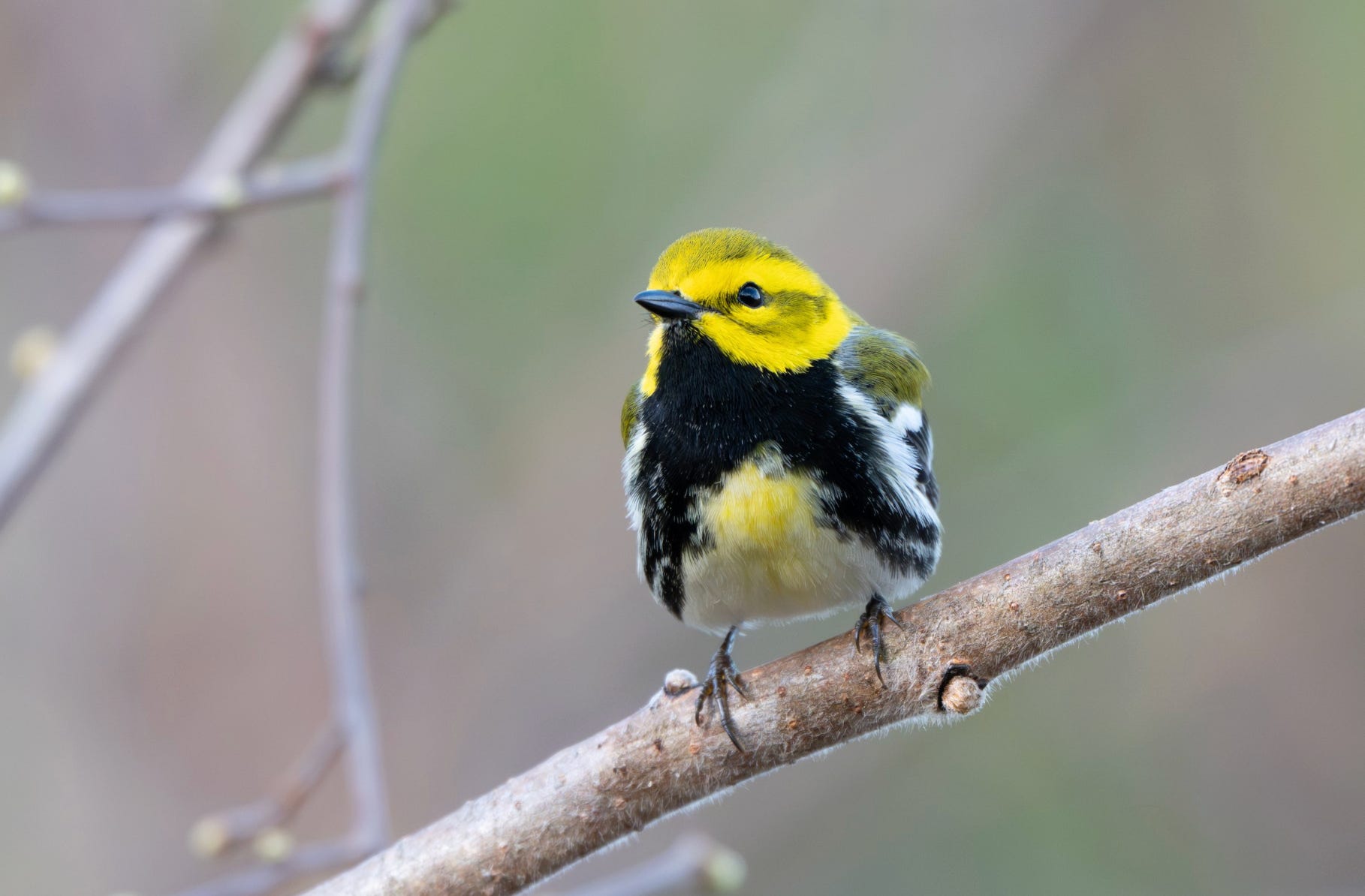
Welcome back to the Birding University Warblers Study Series! If you’ve worked through our Warblers 101 and 201 lessons, you’ve already built a strong foundation for understanding and identifying warblers in the field.
For Warblers 101, we first defined exactly which “warblers” we were discussing, as the term is applied to many unrelated groups of birds worldwide. From there, we explored the diversity, distribution, migration patterns, and conservation of the Parulid warblers found throughout the United States and Canada, while also introducing the major genera that help define this remarkably varied family of birds.
At the 201 level (201a, 201b), we explored the foundational elements of warbler identification—size and shape, color patterns, behavior, habitat, and vocalizations—and connected these tools to broader field strategies, including migration timing, habitat structure, mixed-species flocks, and weather. We also provided an extensive collection of free Birding University resources designed to give you a strong foundation for understanding both warblers specifically and bird identification more broadly.
Now we move into the 301 level, where warbler identification builds upon the skills you’ve developed over the last few months. Here, the process becomes more refined. In these lessons, we’ll focus on the intermediate skills and insights that help birders move beyond the Foundations of Field ID into more detailed field marks.
Reading the Warbler: Learning the Language of Plumage
Ultimately, the goal of warbler identification during spring and the breeding season isn’t rote memorization—it’s building a foundational understanding of the bird in front of you. Think of it as the difference between memorizing a difficult word and learning the alphabet, sounds, and structure of language itself. Once you understand those building blocks, you can recognize new words more easily, understand how they’re formed, and use them with confidence in different contexts.
Warbler identification works much the same way.
Keep reading with a 7-day free trial
Subscribe to Birding University to keep reading this post and get 7 days of free access to the full post archives.