
Vagrants 101
Exploring the forces that send birds thousands of miles beyond their usual range

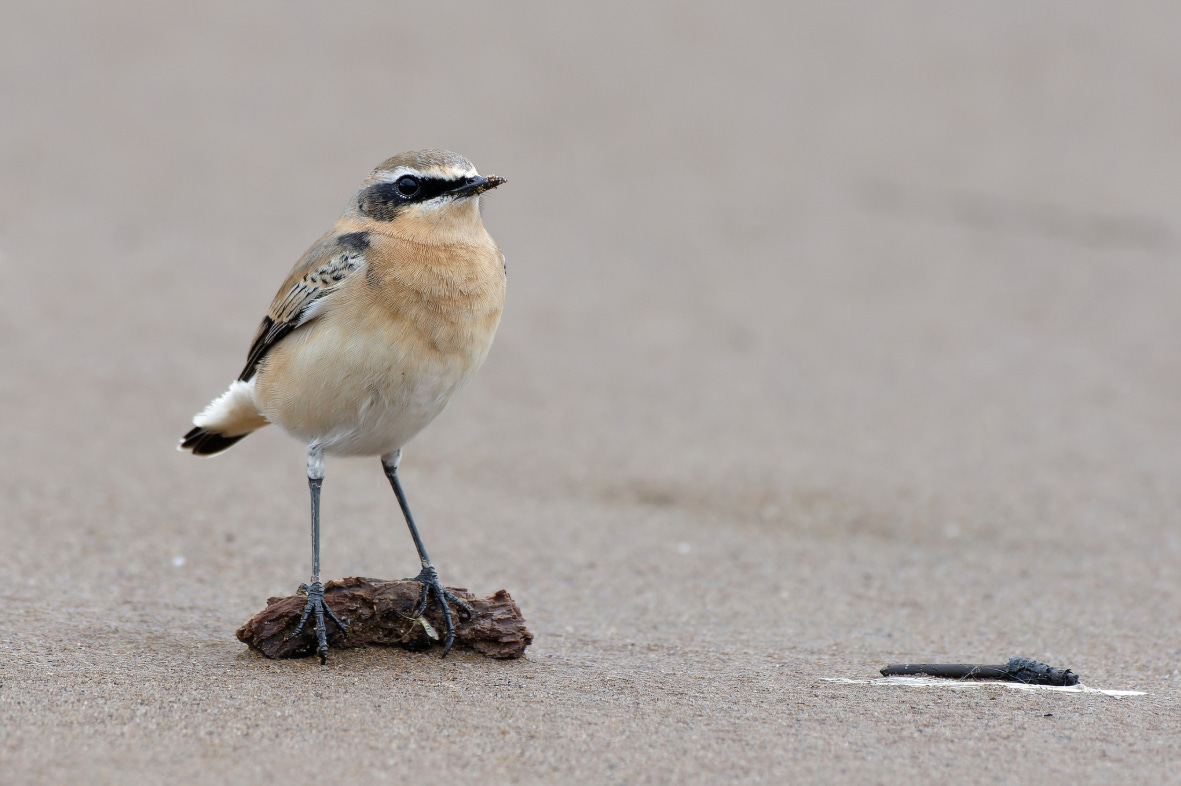
Day after day, birdlife unfolds in familiar ways—territories defended, migrations repeated—until one bird upends the script entirely by showing up somewhere astonishing. In this 101 guide, we’re diving into the fascinating world of vagrant birds: those far-flung wanderers, the accidental visitors, the rare strays making cameo appearances in places well outside their usual range. From overshooting migrants to displaced juveniles and weather-blown transients, we’ll explore why these rarities show up, how to spot them, why they matter, and why every birder should keep their eyes peeled for that one wayward bird ready to make local headlines.
What is Avian Vagrancy?
Avian vagrancy is the appearance of birds far outside their expected range, sometimes by a few states and sometimes by entire oceans. These out-of-place individuals are the visible product of deeper biological mechanisms and environmental forces at play. Young birds may follow the wrong migratory headings due to inherited orientation errors, strong weather systems may displace migrants well beyond typical flyways, and some species occasionally overshoot their destinations when migratory restlessness runs high.
Across the United States and Canada, these processes converge most dramatically during post-breeding migration in the Boreal autumn, when inexperienced juveniles, active storm systems, and long-distance pathways overlap to produce a steady trickle—and at times a cascade—of rare arrivals.
Vagrancy is not limited to any one region. Birds across the world navigate immense distances using inherited behavioral programs that sometimes misfire, and the resulting outliers offer clues about how migration evolves and how species respond to shifting climate and habitat patterns. Weather, population pressures, and landscape change (including natural disturbances such as wildfires) can amplify or dampen these movements. Far from being isolated curiosities, vagrants reflect broader ecological and atmospheric dynamics.
For birders, these unexpected visitors break the rhythm of predictable migration. Encountering a species well outside its known range highlights the flexibility, risk, and improvisation inherent in bird movement. Understanding the mechanisms behind vagrancy—orientation errors, storm influence, dispersal, and chance—adds depth to those encounters, positioning each sighting as part of a larger story about how birds move through the world.
Why Do Birds Become Vagrants?
Birds don’t abide by the geopolitical boundaries that humans etch into maps. Instead, their movements are typically driven by resources—food to rear their young and survive, nest sites, or potential mates —each of which plays a pivotal role in why a bird expends energy to migrate in the first place. In general, birds are trying to conserve their energy whenever possible, so why do we see vagrant birds at all?
Birds become vagrants largely because of the mechanics of migration itself. Many species rely on inherited directional programs to guide their long-distance flights—and when those programs glitch through genetic quirks, developmental issues, or simple inexperience, birds can end up in unexpected places. It’s tempting to shrug and say “birds have wings,” but there’s real science behind these patterns, and our understanding of them is growing.
Types of Vagrancy
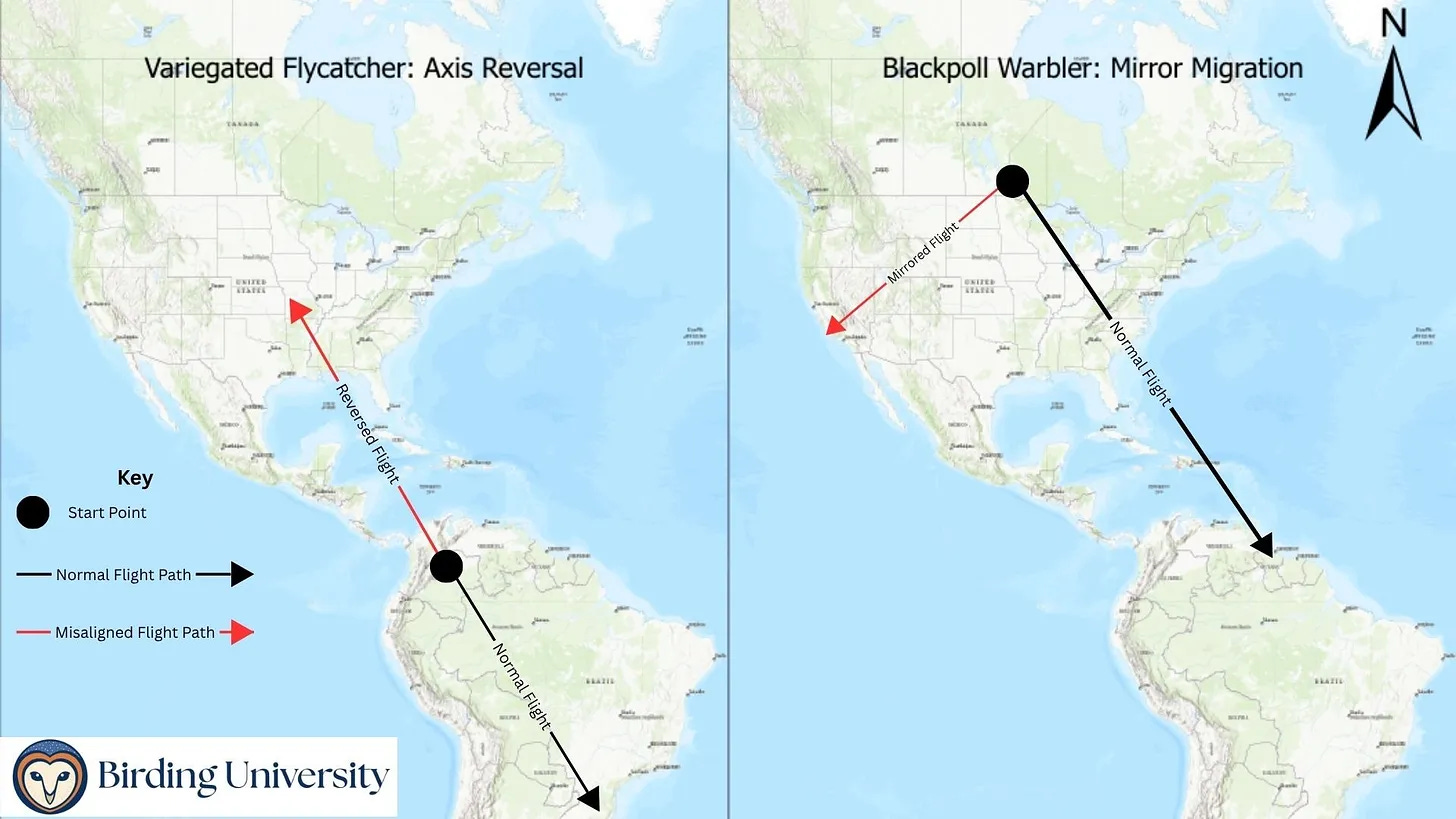
We now understand many of the mechanisms that drive avian vagrancy. Birds may overshoot their destination by running their migration program too long—for example, a southern-breeding Summer Tanager or Blue Grosbeak appearing in Maine in spring. Vagrancy can also result from compass errors, such as reverse migration or mirror-image misorientation. Other contributing factors include wind drift, post-breeding dispersal, and human-driven vagrancy. The ultimate effects of these errors vary widely, depending on which underlying navigational mechanism has gone awry and the species involved.
In the case of mirror-image misorientation, these errors can send Eurasian species toward North America rather than Africa, or western North American-breeding species toward the Atlantic coast rather than the Pacific. Another compass error that can result in vagrancy is axis reversal. Axis reversal is when a bird follows its expected migration axis but in the wrong direction—north instead of south, or east instead of west.
Weather is an equally powerful contributor. Strong storm systems and pressure gradients can physically displace birds far from their intended routes. Shorebirds, seabirds, and coastal migrants are especially vulnerable to sustained winds that may push them far inland or across entire ocean basins.
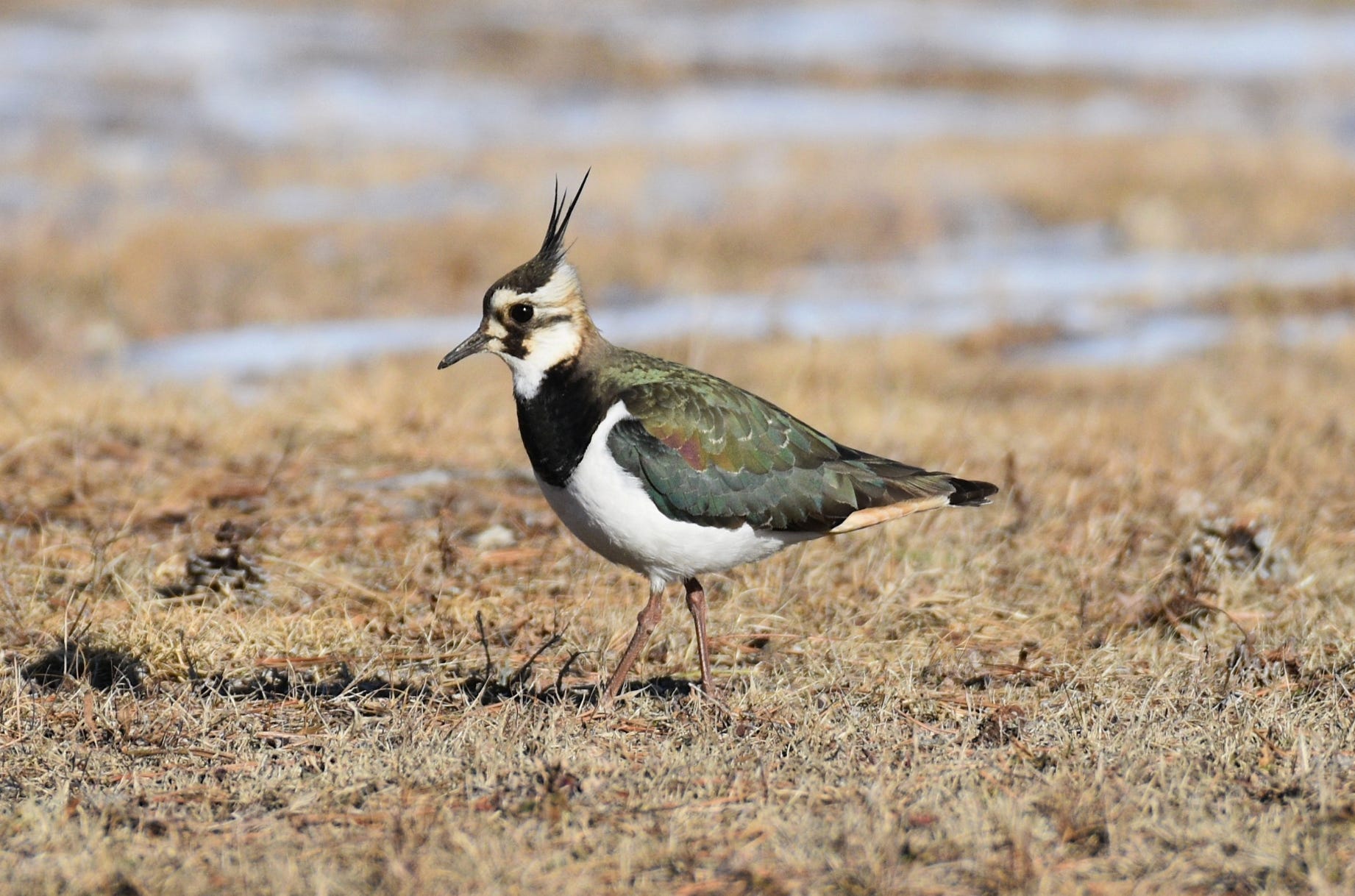
A classic example of weather driving North American vagrancy occurs in early spring, when high-pressure systems form over the North Atlantic, near Iceland and Greenland. When this happens, the circulation of these systems generates strong easterly winds. If those winds persist for several days, they can push migrating European waterfowl and shorebirds, such as Northern Lapwings, off course. The result? A surge of transatlantic vagrants turning up in vagrant-rich Newfoundland or other coastal Canadian provinces. Even when not physically blown off course, migrants may reroute around unfavorable conditions, ending up well outside their expected range.
Famous Vagrant Sightings in North America
Across North America, vagrancy takes on distinct regional flavors. Western birds drift east in fall while eastern species wander west, creating a seasonal exchange across the continent. In the Northeast, birders scan for Eurasian strays filtering through eastern Canada, the Maritimes, and New England, while Alaska—perched at the edge of two continents—regularly hosts arrivals from Asia. Florida pulls in wanderers from the Caribbean and Latin America, and Texas and Arizona catch species drifting north from Mexico. And sometimes, birds cross entire oceans, reminding us that vagrancy is as global as it is unpredictable.
North America’s birding history is full of astonishing vagrant appearances that have galvanized observers. Below are just a few recent high-profile vagrants that left birders buzzing and reaching for their binoculars.
Waved Albatross: The Galápagos Glider Makes a Historic Drift
The Waved Albatross typically patrols the seas around the Galápagos Islands, but recently this critically-endangered seabird made a headline-grabbing visit far from home. This regal albatross typically nests on Española Island and spends most of its non-breeding time riding the waves off Ecuador and Peru.
On October 5, 2025, a lucky pelagic out of Bodega Bay in Marin County, California, picked up what the American Birding Association declared the first documented record of this species north of Costa Rica. The individual, off-course by thousands of miles, held station near the boat for about 45 minutes, appearing healthy and completely unfazed by its audience. For California birders, seeing a Waved Albatross is the height of oceanic birding. This bird was not just a rarity but a jaw-dropping range breaker, rewriting expectations for what might drift into Pacific waters. This one will no doubt become part of regional lore.
Cattle Tyrant: A South American Pasture Hand Embraces Urban Life
The Cattle Tyrant is a boldly-colored flycatcher from the open savannahs and pastures of central South America, typically following large grazing mammals and hawking insects flushed from the ground. Its olive-brown upperparts, rich yellow belly, and habit of clinging near cattle give it an identity far removed from the familiar flycatchers of the United States and Canada.
Against all odds, one of these tropical wanderers turned up in downtown Corpus Christi, Texas, in mid-November of 2023, marking the first documented occurrence of the species in the United States. While some questioned the bird’s origin, birders traveled for hours to converge at the intersection where it was spotted gleaning flies from a palm tree, darting along gutters, and fully embracing urban sidewalk life. For many, the sighting is a reminder that migration and vagrancy sometimes throw up spectacular exceptions rather than predictable patterns. This bird’s arrival speaks to the possibilities of avian movement in a changing world—when a bird built for South American pastures adapts to the streets of a Texas city.
Common Redshank: Eurasia’s Scarlet-Legged Wader Makes a Michigan First
The Common Redshank made waves in the North American birding world when one was discovered at Pointe Mouillee State Game Area in southeast Michigan on July 4, 2022. According to the Michigan Bird Records Committee, this marked not only the first state record for Michigan, but also the first documented continental U.S. occurrence of this typically Eurasian coastal shorebird.
Typically breeding across temperate Eurasia and wintering along the coasts of Europe, the Mediterranean, and South Asia, the species was far outside its normal range. The bird was found foraging on the mudflats at Pointe Mouillee, drawing eager birders from across the Midwest to see this unprecedented visitor. It not only underscores the thrill of vagrancy—how geographic oddities pop up to rewrite expectations—but also serves as a reminder that even shorebirds with well-established migration circuits can turn up thousands of miles away under the right set of circumstances.
Steller’s Sea-Eagle: Siberia’s Giant Goes on Tour
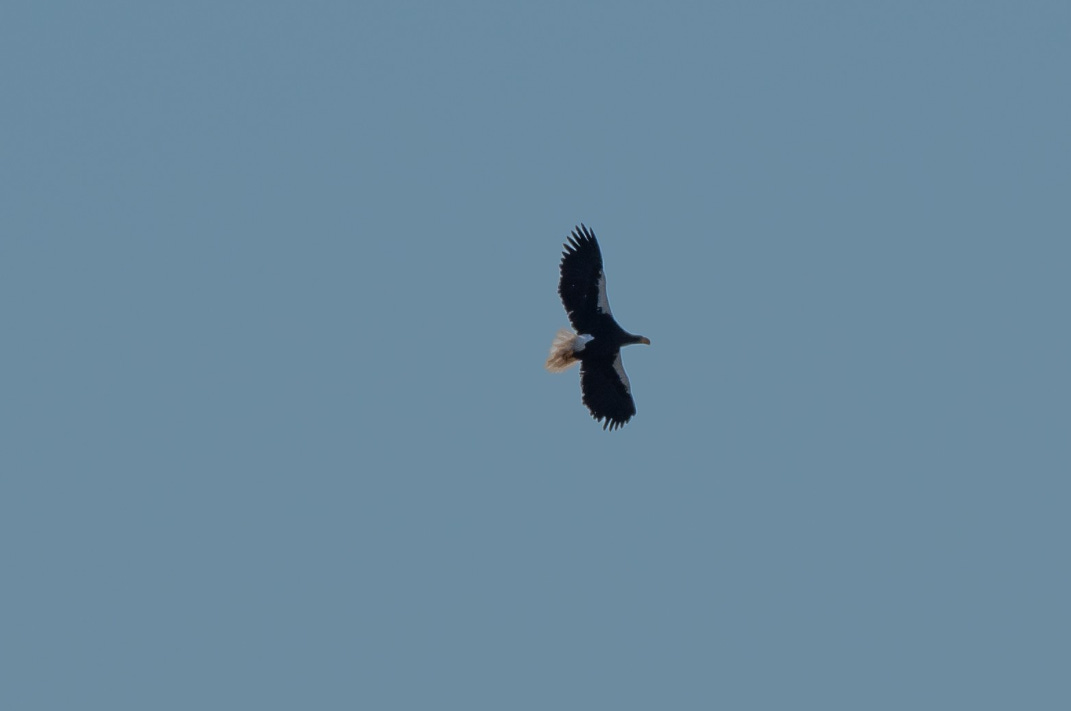
A Steller’s Sea-Eagle in flight, carrying a fish in Japan, is a sight birders dream about. This species soars on an impressive wingspan up to 8 feet, and sports a massive golden bill as well as bold black-and-white plumage. Only about 4,000 of these majestic raptors exist in coastal northeastern Asia. Yet one improbably found its way across the entirety of North America, arguably the most celebrated vagrant in recent memory.
In late 2021, birders in eastern North America began encountering reports of a massive, wayward raptor—one that seemed impossibly far from home. Its journey, however, didn’t start in Massachusetts or Maine. The bird was first documented in interior western Alaska in August 2020, then—remarkably—what is believed to be the same individual resurfaced in Texas by early 2021.
From there, the eagle’s eastward odyssey unfolded in real time. Nicknamed “Stella,” it wandered through Nova Scotia, Quebec, New Brunswick, Massachusetts, and Maine throughout 2021-22, captivating birders wherever it went. At the time of writing, Stella is still on the move, with recent sightings from the Avalon Peninsula near St. John’s, Newfoundland and Labrador—its home base for the past two years and a fittingly dramatic waypoint for one of the most extraordinary vagrants in recent memory.
Highlighting the impact vagrant birds can have on local communities, this Steller’s Sea-Eagle’s stay in New England drew large crowds, bringing an estimated $380,000 to $730,000 to the regional economy. The same research also found a willingness to spend an additional $139,000- $174,000, underscoring the potential value of a vagrant bird to conservation and communities.
How to Document Vagrant Birds
Documenting vagrant birds serves two parallel goals: establishing a reliable record of an unusual event and contributing meaningful data to the broader understanding of avian movement. When birders encounter a bird far outside its expected range, the first priority is careful, structured observation. That begins with detailed field notes taken at the moment of the sighting—plumage, behavior, vocalizations, habitat, weather conditions, and any features that help rule out similar species. Photographs or audio recordings, even if imperfect, provide critical objective evidence.
It’s essential to record what the bird was doing when observed—feeding, flying, or interacting with other birds—and how long the sighting lasted. Observers should also note the bird’s apparent health. A report stating, for example, “The bird appears healthy; it was seen hunting between two fields,” not only gives other birders tips on where to locate the species but also helps ensure the bird can continue its activities without disturbance. These details allow independent reviewers to assess the record’s validity and contribute to a richer understanding of why the bird appeared where it did and how well it is coping with its environment.
Once the core documentation is assembled, it should be submitted to the appropriate entity—eBird, a state records committee, or an ornithological society—ensuring the sighting is entered into a vetted, permanent archive. Vagrants can be hard to identify, especially young, molting, or look-alike species, so clear evidence is essential. Supplementary materials, such as comparison photos, sketches, or notes on similar species, strengthen the record. Transparency is also essential: list which field marks were seen, inferred, or not observed to give reviewers the context they need. Sharing documentation on platforms like Facebook, Discord, or WhatsApp allows local birders to join in the experience and help confirm tricky identifications.
The importance of documenting vagrants extends far beyond the thrill of rarity-chasing. Each confirmed out-of-range occurrence adds a single, valuable point to a long-term dataset that helps scientists track dispersal patterns, orientation errors, storm-driven displacement, and even broader ecological changes. Clusters of vagrants can hint at population expansions, shifts in migratory routes, or large-scale atmospheric events. Single records can become the first signal of a recurring pattern—as seen in several once-mega vagrants now known to wander into the United States and Canada with increasing frequency. Accurate documentation transforms an exciting personal encounter into a scientifically useful record, giving future researchers, conservationists, and birders a clearer view of how birds move through space and time.
Scientific and Conservation Implications of Vagrancy
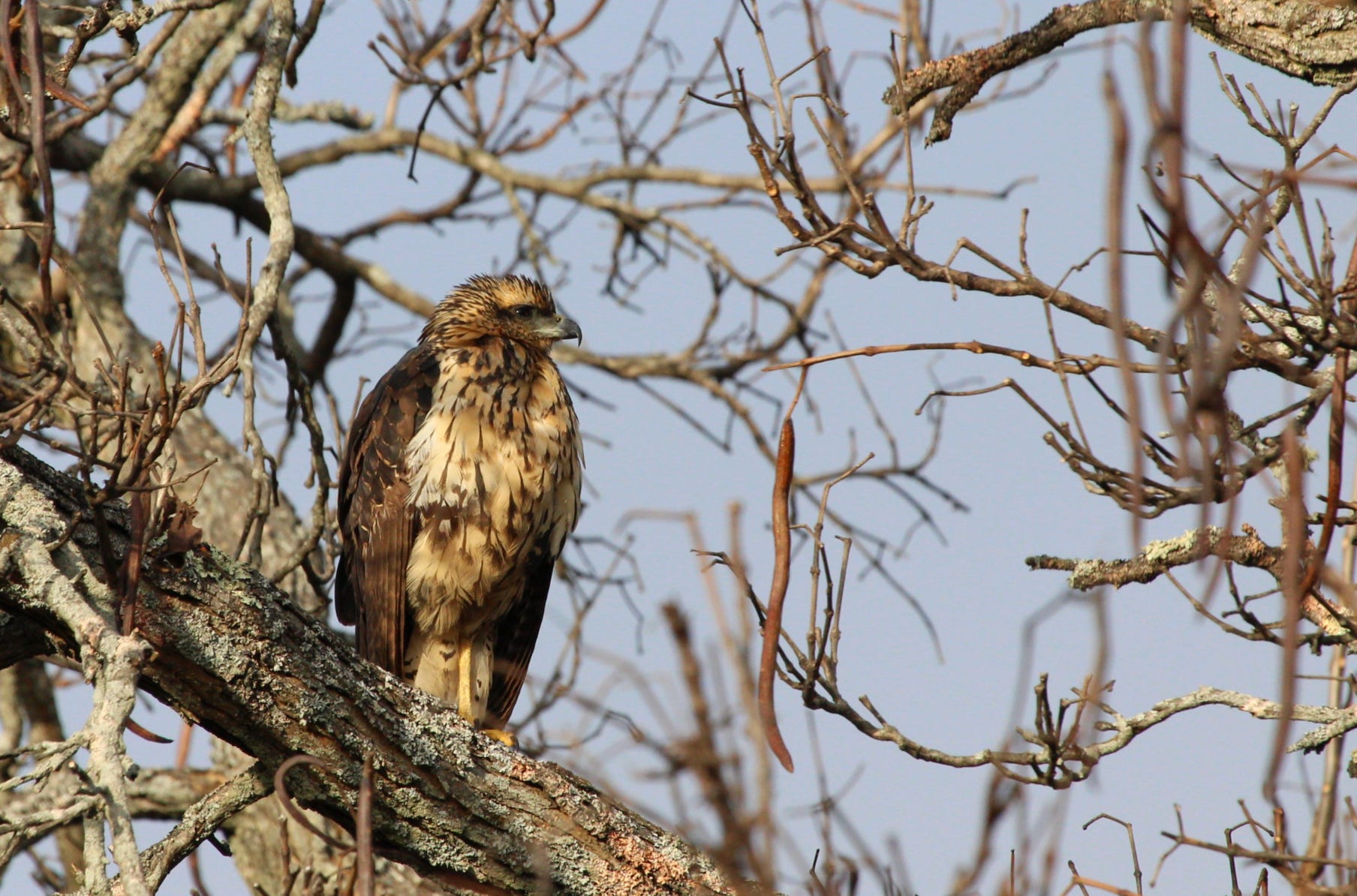
Beyond delighting birders, avian vagrancy has significant scientific and conservation value. Traditionally seen as ecological dead ends, vagrants were thought unlikely to survive or reproduce far from their range. Many do perish, such as the Great Black Hawk that wandered from the Neotropics to Maine in 2018 and succumbed to the winter cold. Yet each journey provides insights into bird behavior, navigation, and adaptation—and offers hope that some adventurous individuals may thrive, discover new routes, or even help expand their species’ range. These stories are more than curiosities; they offer researchers a window into broader patterns of movement and adaptation across species and landscapes.
Increasingly, researchers recognize that vagrants reveal how species respond to environmental change, climate shifts, and habitat loss. They can highlight migration corridors otherwise invisible and expose conservation vulnerabilities when storms or altered conditions push birds into unfamiliar regions. Wildlife managers can use these events to assess species resilience and the suitability of habitats beyond their normal ranges.
A compelling example comes from American Flamingos, which were dispersed across the southeastern U.S. after Hurricane Idalia in 2023. Flamingos appeared in states they had not occupied for over a century, from Florida to Ohio. While many were expected to disperse or perish, some remained—particularly in Florida, where they began reestablishing themselves in suspected historical breeding areas. That initial vagrancy pulse essentially reseeded parts of the species’ former range, demonstrating how natural events can catalyze recovery and suggesting that habitats remain suitable for recolonization. It remains to be seen if they will breed in Florida.
Cases like these underscore why vagrancy deserves attention from a conservation standpoint. Large-scale displacement events are rare, but they reveal where restored or protected habitats can support species, where management gaps exist, and how natural movements interact with conservation efforts. Ultimately, vagrancy serves as an ecological stress test, revealing both the fragility and the flexibility of species in a changing world. When carefully documented and interpreted, these rare appearances offer surprising insights into the future trajectories of birds under shifting climatic and environmental pressures.
Closing Thoughts
Vagrants captivate us because they sit at the intersection of chance and pattern—individual birds whose unexpected journeys hint at much larger stories. These wanderers reflect the interplay of instinct, weather, geography, and the sometimes-chaotic realities of migration, reminding us that bird movement is never as fixed or predictable as field guides suggest. Every wayward plover, misplaced flycatcher, or ocean-crossing albatross is part of a system that is both beautifully orderly and wildly improvisational.
At the same time, vagrants challenge us as observers. Careful documentation doesn’t just confirm a rare sighting; it builds a body of knowledge that helps scientists track how species respond to storms, shifting climates, and altered landscapes. As the post-Idalia flamingo recolonization demonstrates, vagrancy can have effects far beyond a single sighting, highlighting resilient habitats and potential conservation opportunities.
Vagrants 101 is just the beginning. In future installments, including those on our paid tier, we’ll dive deeper into the mechanics of vagrancy and how tools like radar, satellite imagery, and eBird data can help you anticipate their movements. We’ll also show how to position yourself—geographically, seasonally, and strategically—to maximize your chances of finding these unforgettable out-of-place visitors.