
Study Series: Warblers 301b
The subtle patterns that drive warbler presence

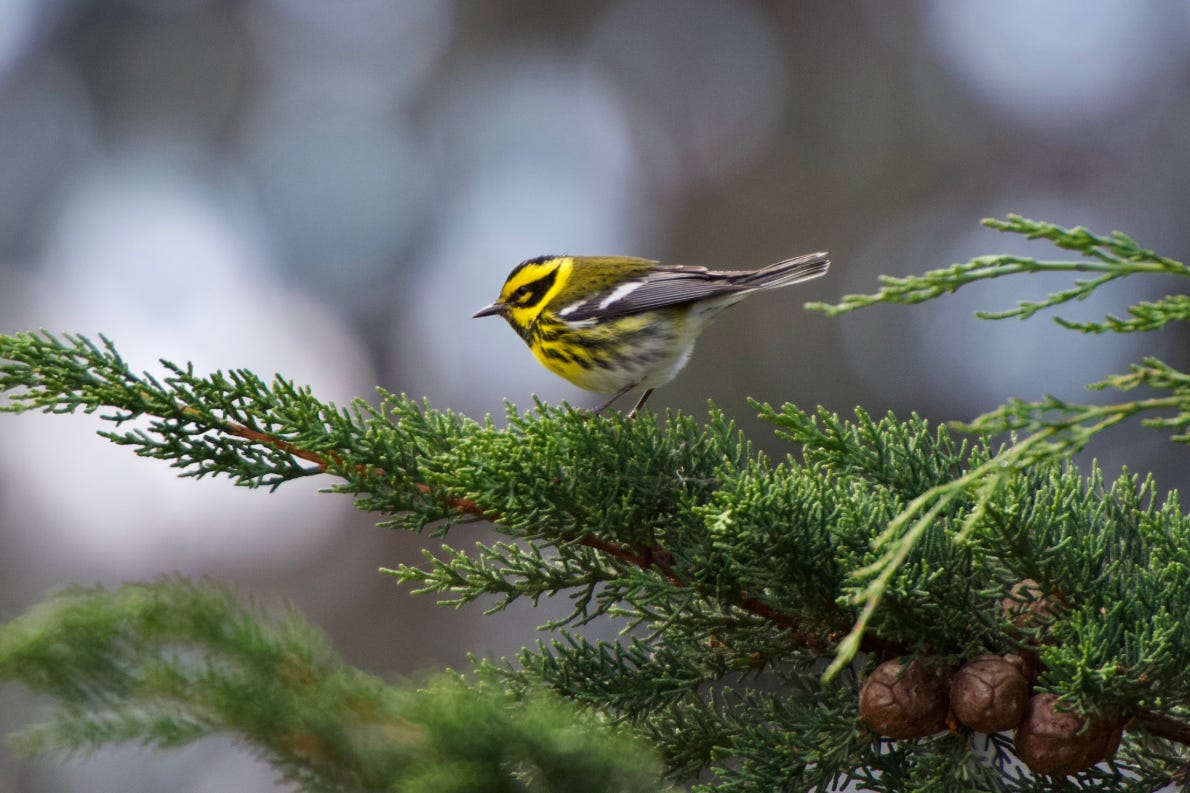
Welcome back to the Birding University Warblers Study Series. In 201b, we focused on the foundational systems that shape where warblers occur during migration: timing, habitat, weather, and behavior. Those principles form the backbone of successful warbler birding, turning what can feel like random encounters into something far more predictable.
But advanced warbler birding is rarely about simply being in the right habitat. By the time you reach this level, most productive areas already look broadly similar: forests, edges, wetlands, and migrant stopover sites. The real difference lies in learning to read subtle patterns within those habitats. Why are birds concentrated in one corner of the woods but absent from another? Why does one tree seem alive with activity while the next remains quiet? Why does the same trail produce dramatically different birding under slightly different weather conditions?
At higher levels of awareness, finding warblers becomes an exercise in interpretation. The most successful birders are constantly evaluating microhabitats, food availability, light conditions, wind exposure, and movement patterns in real time. Rather than simply walking through the habitat, they are reading it.
From Habitat to Microhabitat
Most birders eventually learn that warblers favor certain broad habitat types during migration. Forest edges, shrubby clearings, wet woods, and mature canopy habitats are all classic starting points. But within those habitats, birds are often distributed unevenly. A productive forest edge, for example, is not simply any place where trees meet open space. The best edges usually concentrate multiple resources at once. They may provide shelter from prevailing winds, receive early-morning sunlight that increases insect activity, or contain a mix of vegetation heights that supports greater diversity of foraging behavior. Two edges can appear nearly identical from a distance while producing completely different levels of bird activity.
Keep reading with a 7-day free trial
Subscribe to Birding University to keep reading this post and get 7 days of free access to the full post archives.