
Finches 101
An introductory guide to the familiar and fascinating finches of the U.S. and Canada

Finches are fascinating! A flock of Evening Grosbeaks materializes through a snowstorm—a blizzard of yellow, black, gray, and white flashing against the pale sky. They land in a whirl of wings at a seed tray heavy with black oil sunflower, chattering sharply as they feast. Within minutes, the tray is bare, the flock vanishes into the swirling snow, and silence returns—save for the soft hiss of falling snowflakes.
At first glance, finches can feel “easy.” They’re familiar, often boldly colored, and staples at backyard feeders—quintessential “starter birds” for new birders. Yet the deeper you look, the more fascinatingly complex they become. Their movements are irruptive, their variations fascinatingly complex, and their ecology worthy of study.
Entire tribes within species—each with distinct vocal types, ecological niches, and nomadic ranges—challenge even experienced observers. And within the group lie some of the most urgent conservation stories on Earth: the Hawaiian honeycreepers, radiant jewels of evolution now clinging to survival. Together, they form a portrait of beauty, adaptability, and fragility—the finches of the United States and Canada.
At Birding University, we’ll help you see this familiar family in a new light. In this primer, you’ll build a foundation in the natural history, identification challenges, and conservation stories of North America’s breeding finches—from grosbeaks to crossbills to extraordinary honeycreepers. This foundation will serve as your stepping-stone to a fundamental understanding of this remarkable family.
What Exactly Are Finches?
Finches, along with euphonias (colorful Neotropical species) and their allies, belong to the family Fringillidae—a lineage of seed-eating passerines distinguished by stout, conical bills designed for crushing seeds. In the United States and Canada, around 67 species have been recorded, with roughly 35 considered regular breeders, including the Hawaiian honeycreepers. The remainder are primarily vagrants from Asia, Europe, and the Neotropics.
It’s an incredibly diverse family—arguably one of the most specialized among North American songbirds—adapted to habitats ranging from alpine zones to desert scrub, from the vast Boreal Forest to urban landscapes. Across the continent, the group includes grosbeaks, honeycreepers, rosy-finches, “red” finches, a redpoll, crossbills, goldfinches, and a siskin.
Finch Diversity & Distribution
Finches are among the most familiar birds at feeders—some, like the House Finch, even nest in door wreaths—yet they also surprise us with their unpredictability.
In certain winters, several species of finches wander far beyond their typical northern strongholds—breeding and winter ranges that stretch across the tundra, subarctic, the Boreal Forest, and high mountain conifer zones—chasing cones and seed crops across vast distances. Some years, nearly every boreal finch species moves south in what birders call a superflight. In others, they vanish entirely, leaving feeders quiet and, dare we say, birders’ hearts a little emptier. Their abundance rises and falls with the rhythms of seed production, climate, and weather.
Hawaiian honeycreepers deserve special mention. They represent one of the most remarkable evolutionary radiations on Earth, with species uniquely adapted to fill ecological niches across the islands. Yet many now cling to survival in shrinking montane forests, threatened by avian malaria, invasive predators, and habitat loss. Descended from ancestral rosefinches that colonized the Hawaiian Islands from Asia, the honeycreepers radiated spectacularly into dozens of specialized forms—each a living testament to evolution’s drive and fragility.
In North America (including Hawai’i), here are the principal groups of breeding finches to know:
Grosbeaks
How many? Eight species bear the name “grosbeak” in the U.S. and Canada, though only two—Evening Grosbeak and Pine Grosbeak—are true finches regularly encountered. The others, such as Rose-breasted and Black-headed Grosbeaks, belong to the Cardinalidae family. That is, they’re more closely related to the Northern Cardinal than the two species mentioned here.
ID cues: Thick conical bills; males show bold colors—yellow, black, and white for Evening; rosy-pink for Pine. Females are grayer and, in the case of the Pine Grosbeak, tinged with yellow or orange. These are the largest of our finches.
Habitat: Wooded areas rich in seed-bearing trees like beech, spruce, or Mountain Ash.
Fun fact: Evening Grosbeaks have distinctive flight calls—“call types” that vary across regions throughout their range.
Rosy-Finches
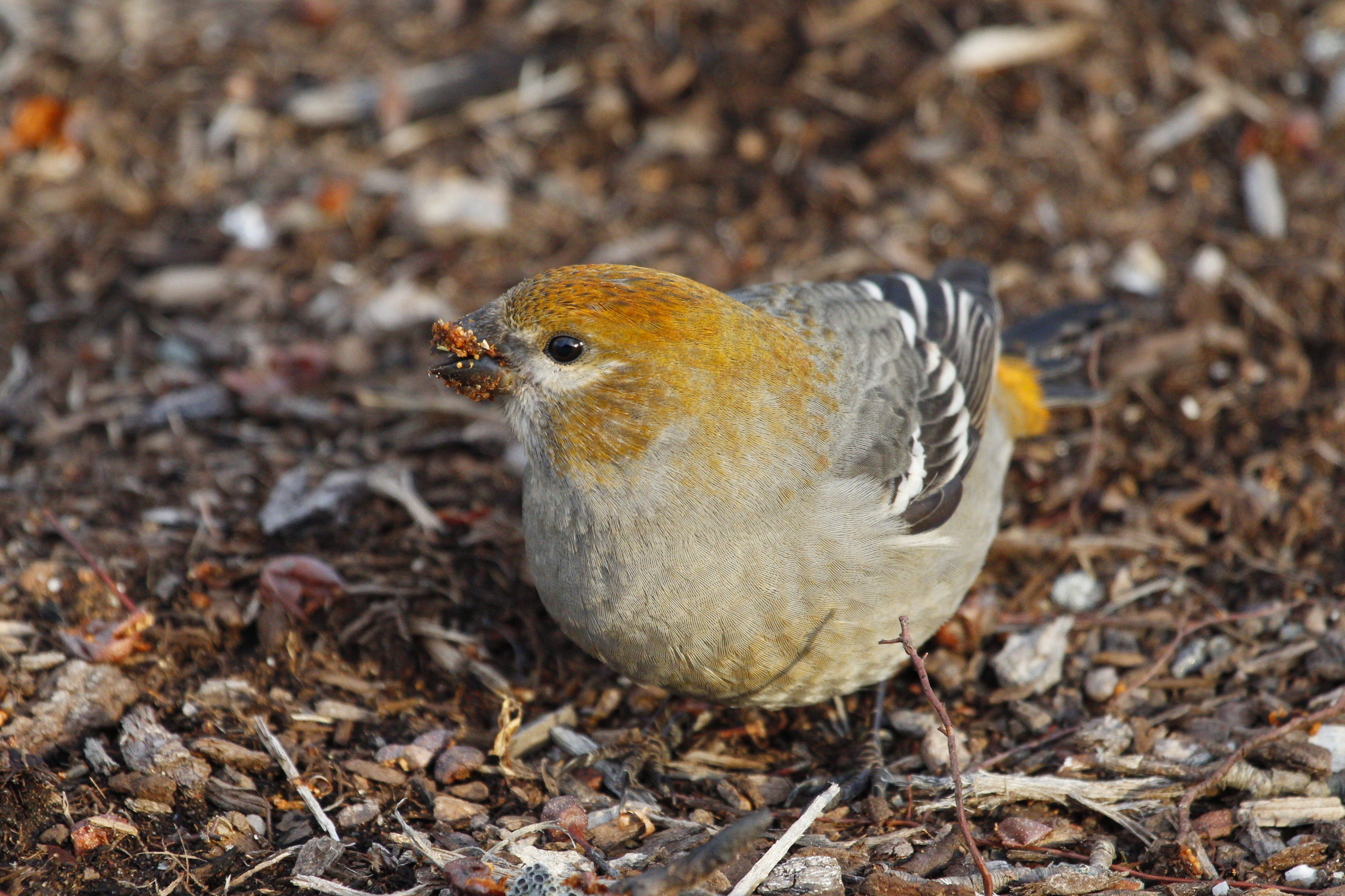
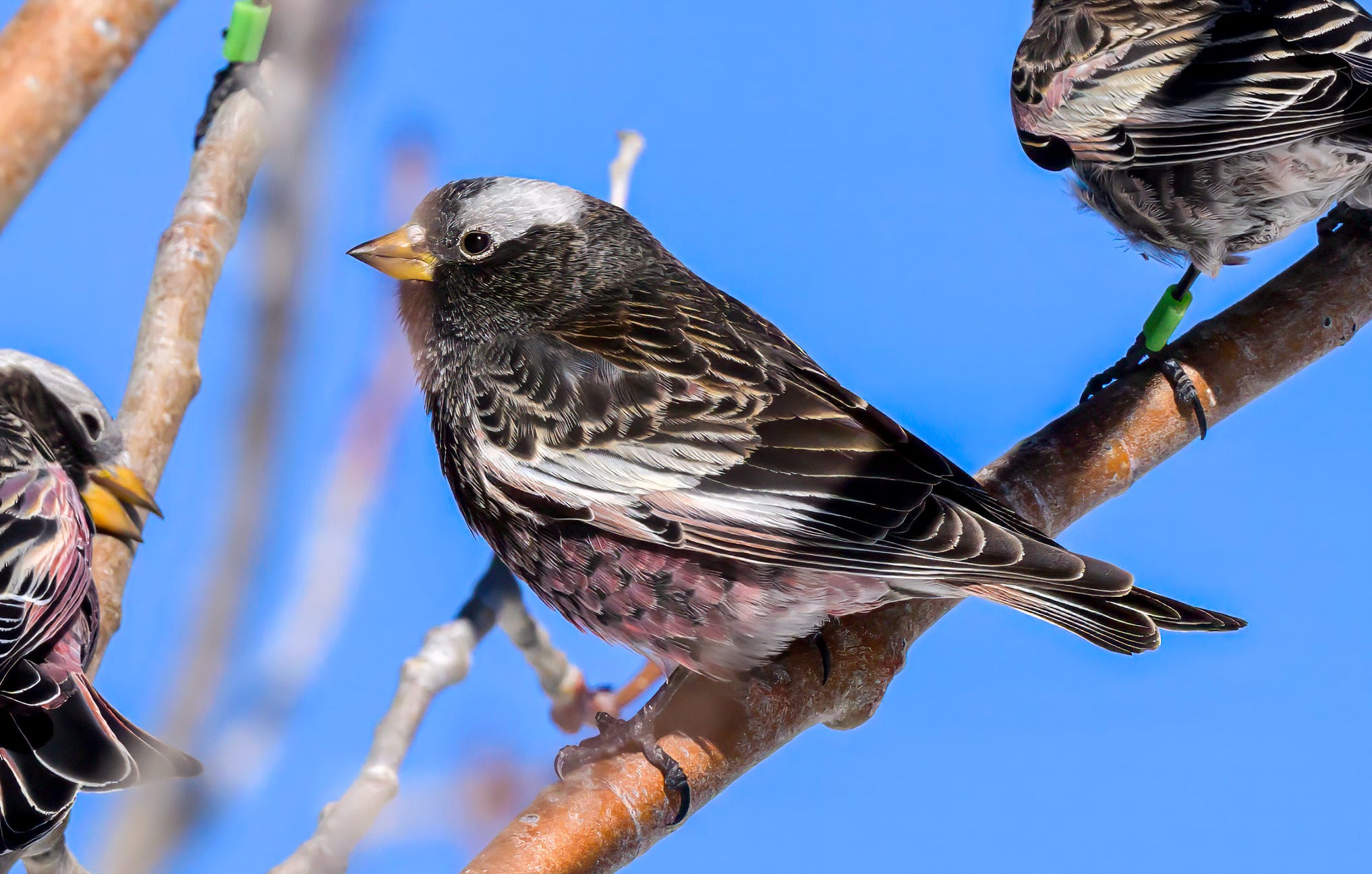
How many? Three species: Gray-crowned Rosy-Finch, Black Rosy-Finch, and Brown-capped Rosy-Finch. Highly localized breeders, they sometimes mingle in mixed winter flocks at high elevations, such as the Sandia Mountains of New Mexico.
ID cues: Dark faces and bodies, rose-tinged feathers, and pale wing panels.
Habitat: Alpine tundra and snowfields; they are among the highest altitude nesting birds in North America, and some of the least understood as a result.
Fun fact: Rosy-Finches often forage directly on snowfields, gleaning windblown seeds or insects.
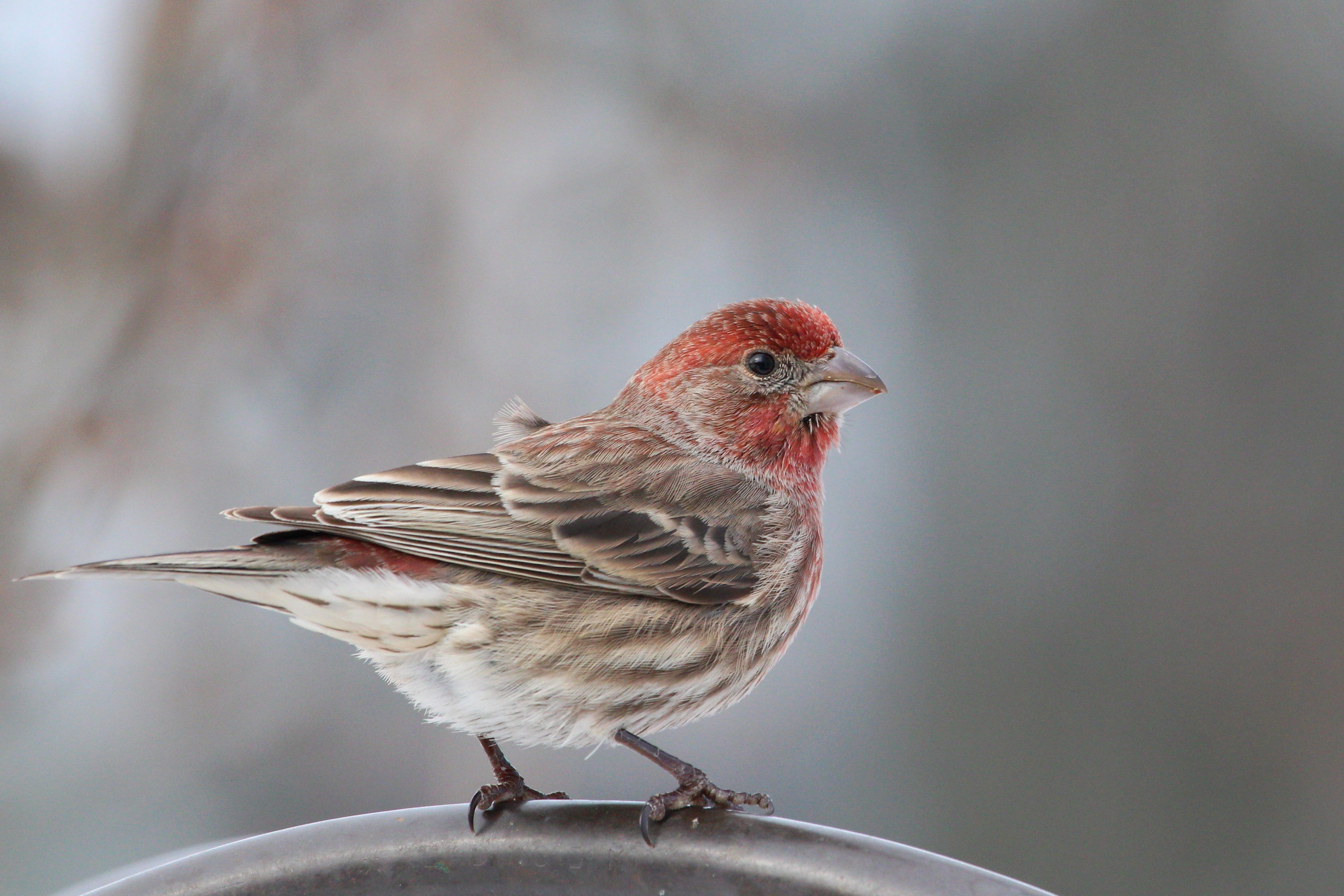
“Red” Finches
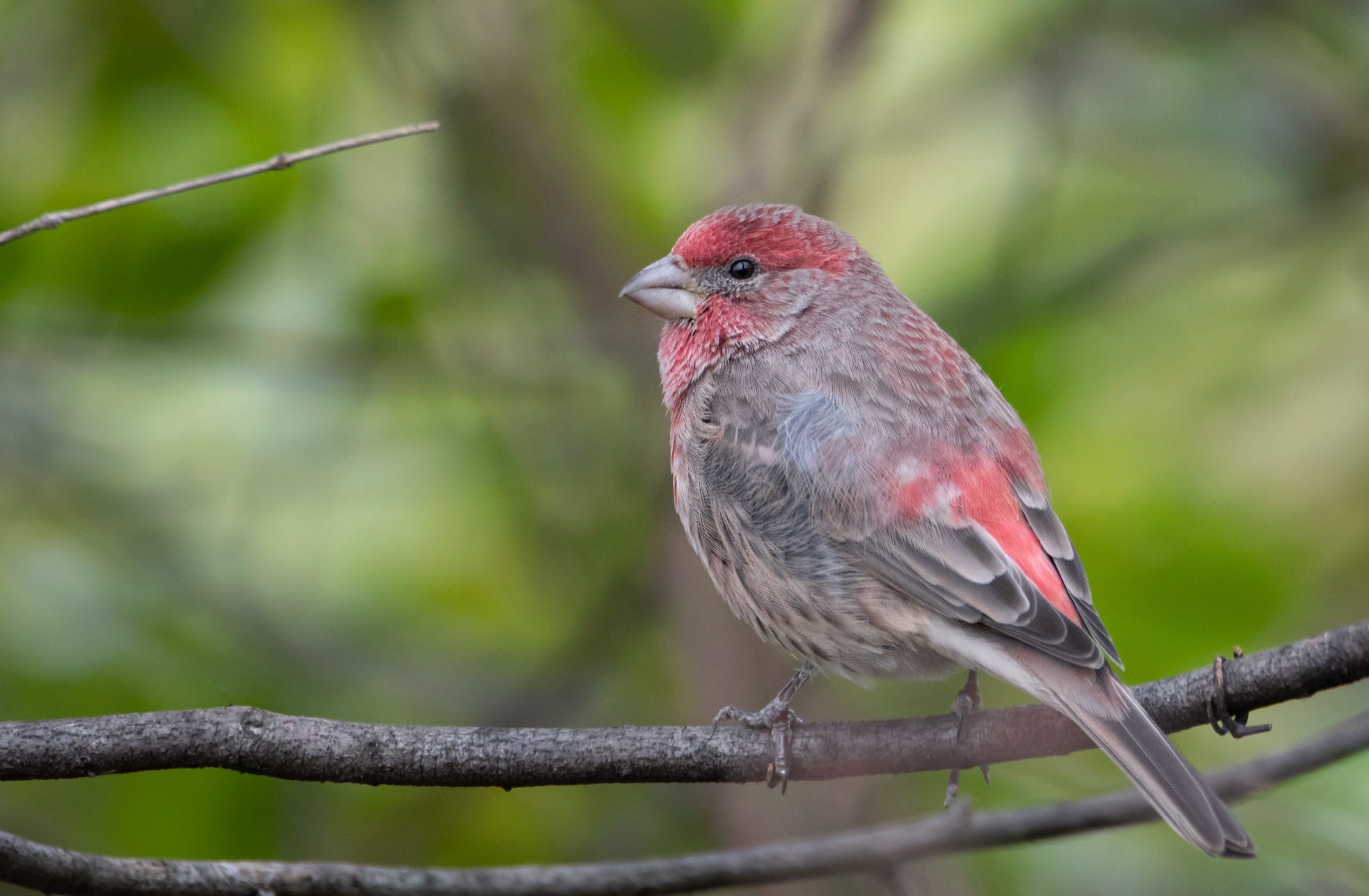
How many? Three familiar species: House Finch, Purple Finch, and Cassin’s Finch.
ID cues: Males display varying shades of red, rose, or raspberry; females are streaked brown and best separated by head pattern and bill shape.
Habitat: From boreal forests to western conifer woodlands to suburban feeders. It’s hard to go anywhere across the U.S. and Canada without being close to a red finch.
Fun fact: The House Finch, native to the West, was introduced to the East in the 1940s from caged “Hollywood Finches.” Their populations met in the Midwest decades later—an ongoing example of rapid range expansion.
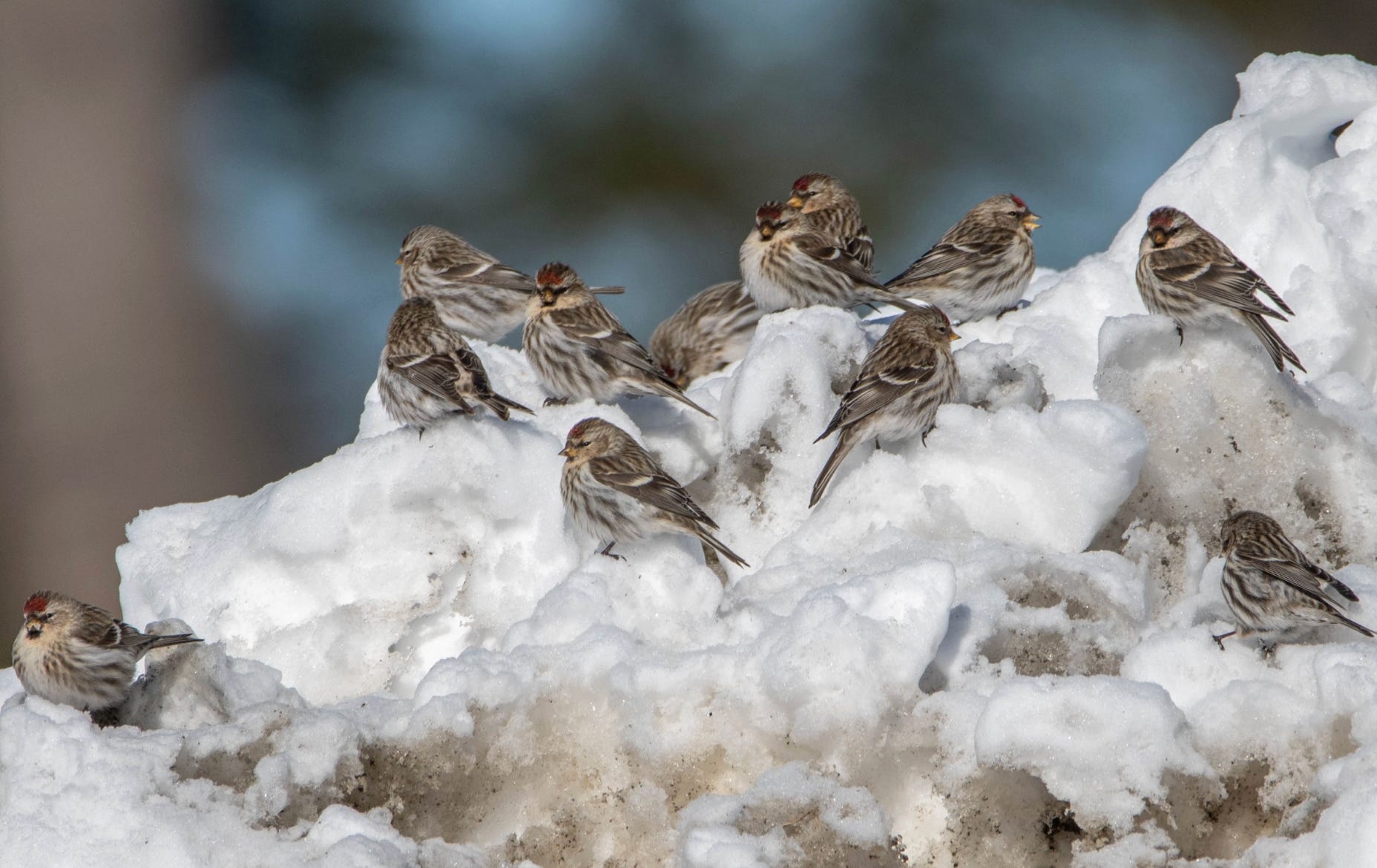
Redpoll
How many? Once split into Common and Hoary Redpolls (and Lesser in Eurasia), all three are now treated as one species, Redpoll.
ID cues: Small, streaky, with a red cap and black chin. Pale, frosty birds with limited streaking and small bills may still recall the former “Hoary” type, which we encourage birders to identify still, even if it’s no longer a full species.
Habitat: Breed across Arctic and subarctic scrub; winter in weedy fields and at thistle feeders.
Fun fact: Despite their plumage variation across what were once considered three species, Redpolls are almost genetically identical—just a single chromosomal inversion drives the visual differences that once separated them.
Crossbills
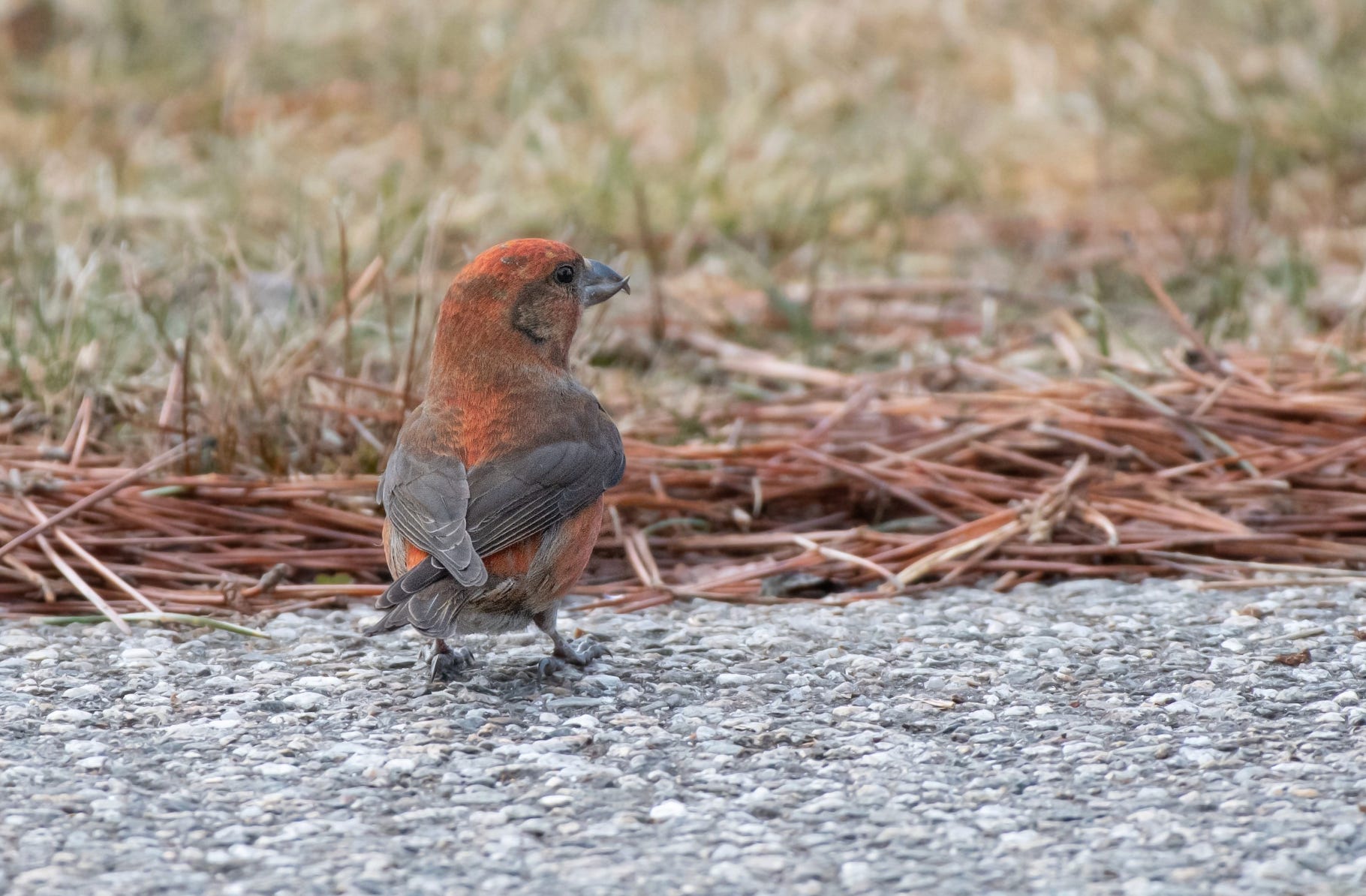
How many? Three species in the U.S. and Canada—Red Crossbill, Cassia Crossbill, and White-winged Crossbill.
ID cues: Instantly recognizable by their crossed mandibles, perfectly adapted to prying seeds from cones.
Habitat: Native conifer forests, especially spruce, pine, and fir. Also, conifer plantations in all settings.
Fun fact: Isolated in Idaho’s South Hills and Albion Mountains, the Cassia Crossbill, named for Cassia County, evolved alongside lodgepole pines without squirrels, developing a thicker bill to pry open the tougher cones. Once thought never to leave its isolated range, recent sightings beyond Idaho hint that it may not be as sedentary as first believed, adding new intrigue to its standing as a distinct species.
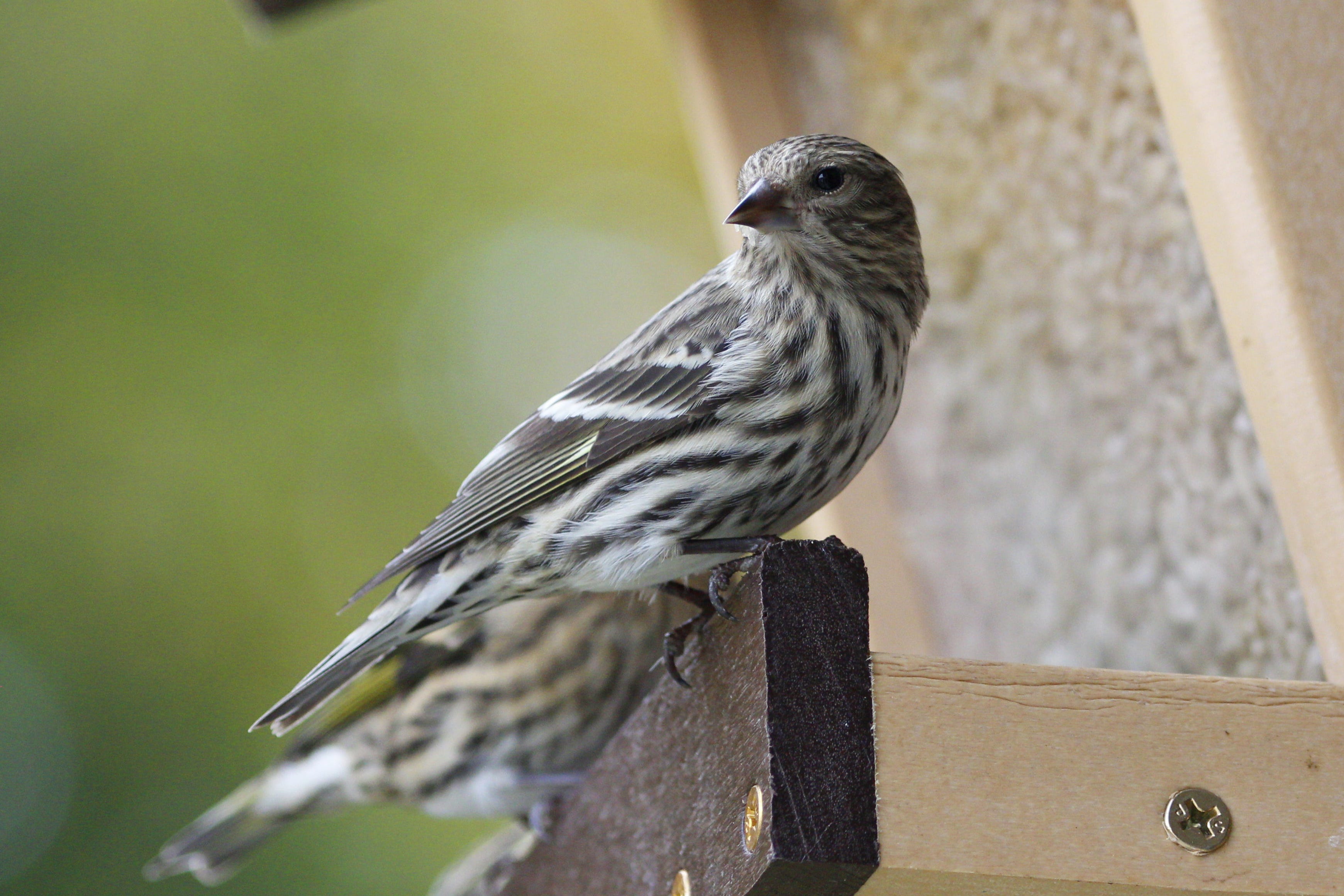
Goldfinches & Pine Siskin
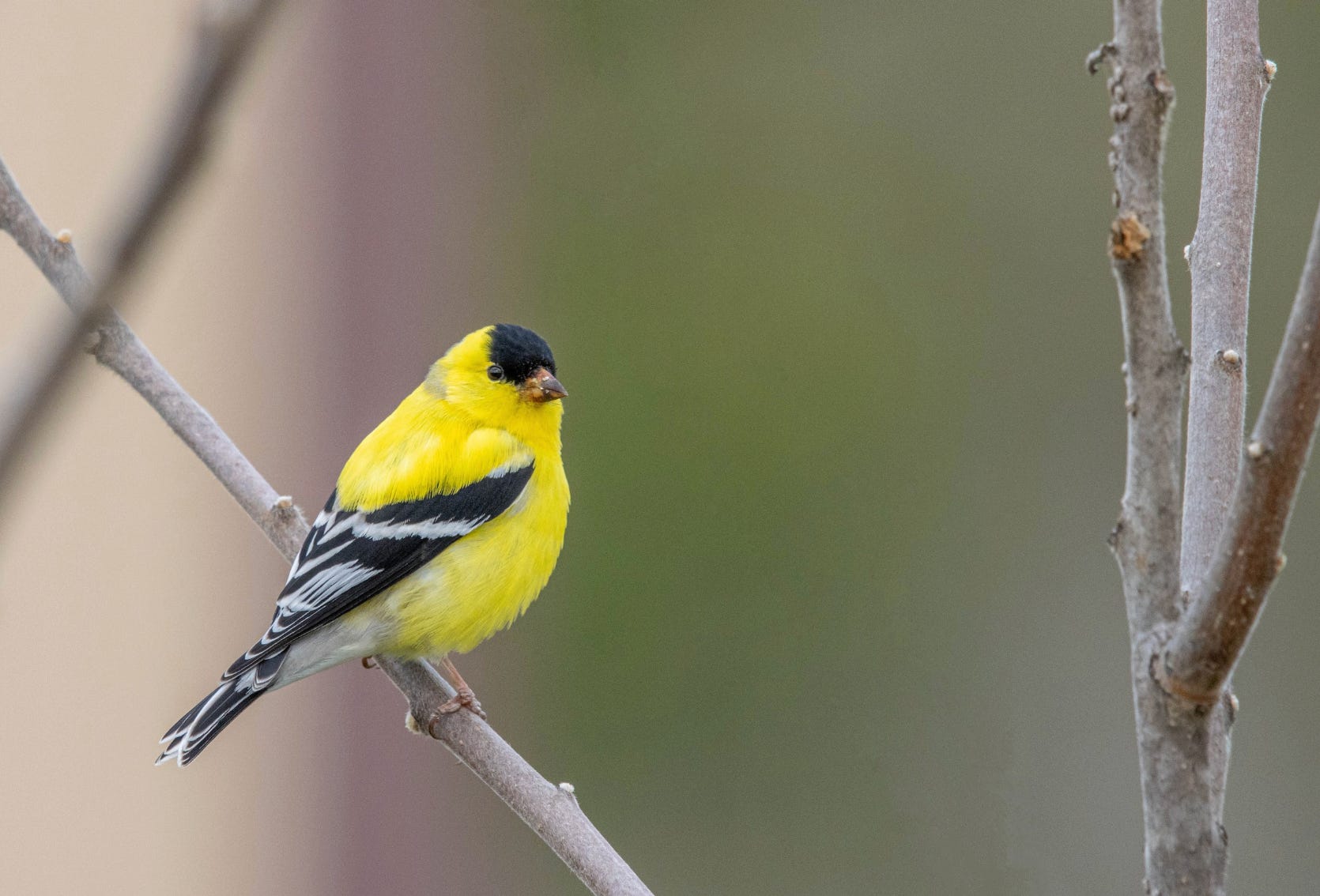
How many? Four species: Lesser Goldfinch, Lawrence’s Goldfinch, American Goldfinch, plus Pine Siskin.
ID cues: Small, sleek, with bouncy flight and sharp calls. Males are brightest in breeding plumage, with flashes of yellow and black.
Habitat: Open woodlands, weedy fields, and backyard feeders.
Fun fact: American Goldfinches nest later than nearly any other North American songbird—often waiting until midsummer when thistles bloom.
Hawaiian Honeycreepers
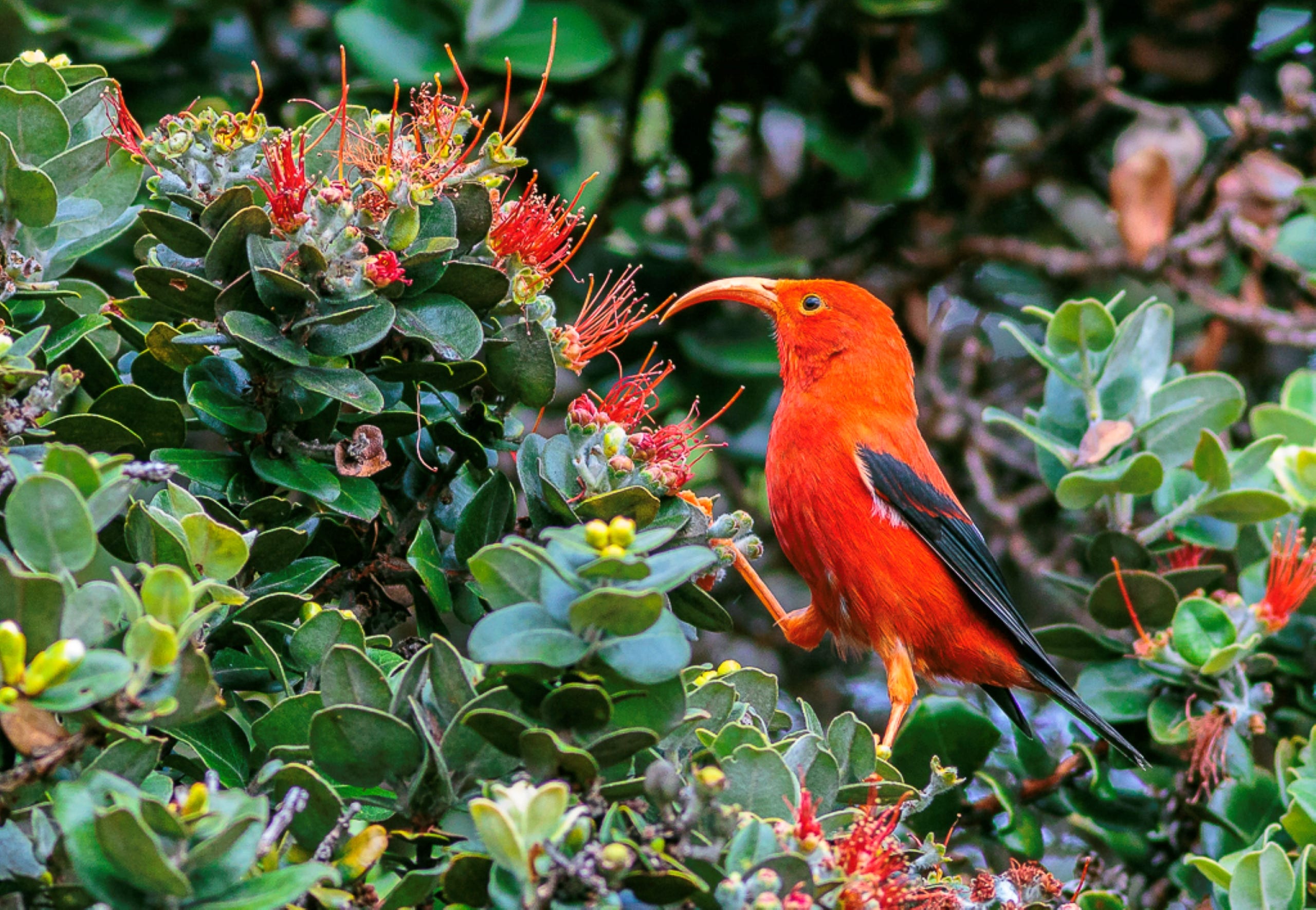
How many? Over 50 species historically; fewer than 20 survive today, including ʻIʻiwi, ʻApapane, Oahu ʻAmakihi, and Palila. Unfortunately, avian malaria, among other threats, is putting this entire group of birds at risk of rapid extinction.
ID cues: Astonishing diversity—curved bills, nectar-specialists, seed-crackers, and insect-eaters, many with brilliant scarlet or golden plumage.
Habitat: Native Hawaiian forests; species distribution varies island to island and with elevation.
Fun fact: The honeycreepers are a world-class example of adaptive radiation—finch-like ancestors evolving into dozens of unique ecological forms.
Challenges & Conservation
Finches are no strangers to volatility. Hawaiian honeycreepers face an existential crisis from avian malaria, habitat loss, and invasive predators. On the mainland, species like Evening Grosbeak have declined by nearly 90% since 1970. Protecting intact forests, controlling invasive species, and mitigating disease remain essential for their future. Organizations such as the American Bird Conservancy, the Maui Forest Bird Recovery Project, and the Finch Research Network are working tirelessly to understand and conserve these remarkable birds.
Attracting Finches
One of the joys of finches is how readily they respond to bird-friendly spaces—from city parks to backyard feeders. Native plants are the foundation: coneflowers, sunflowers, birches, and alders provide natural food sources and cover. Feeders, however, offer the easiest invitation. Supply a mix of nyjer (thistle) and black oil sunflower seeds in tube or tray feeders, primarily through winter, and you’ll likely welcome flocks of finches—sometimes hundreds strong—right to your home.
Final Reflection
Finches may seem familiar and straightforward, but beneath that familiarity lies a world of subtlety and complexity. They challenge us to look closer—to hear call types, notice subtle plumage shades, and follow their shifting nomadic patterns across the continent. The invite us to work harder at conservation. At Birding University, finches are among our favorite groups (but don’t tell the others). Let this primer be your introduction to their world.
In the near future, we’ll launch a full Finch Study Series that dives deeper into this remarkable family—from identifying the familiar “red” finches to decoding the complex call types of the Red Crossbill. And if you haven’t seen it yet, be sure to check out the Winter Finch Forecast from our close friends at the Finch Research Network, which we recently featured in a Birding University Birding Tip. Finches are complex, yes—but they’re also highly accessible, which is what makes them the perfect teachers. Let’s begin the journey to understanding them together.