
Birding Tip: Using eBird’s Hotspot Groups
A smarter way to explore complex birding locations

Welcome to the birdy side of the internet! This week’s newsletter heads into the night. In This Week in Birding History, we revisit an extraordinary nocturnal outing in southeast Arizona that produced an owl-filled checklist few birders could hope to match. In Birding Tip, we explore eBird’s new Hotspot Groups feature and how it can help birders better understand, navigate, and bird large landscapes more effectively.
This Week in Birding History: Oodles of Owls in Cave Creek Canyon
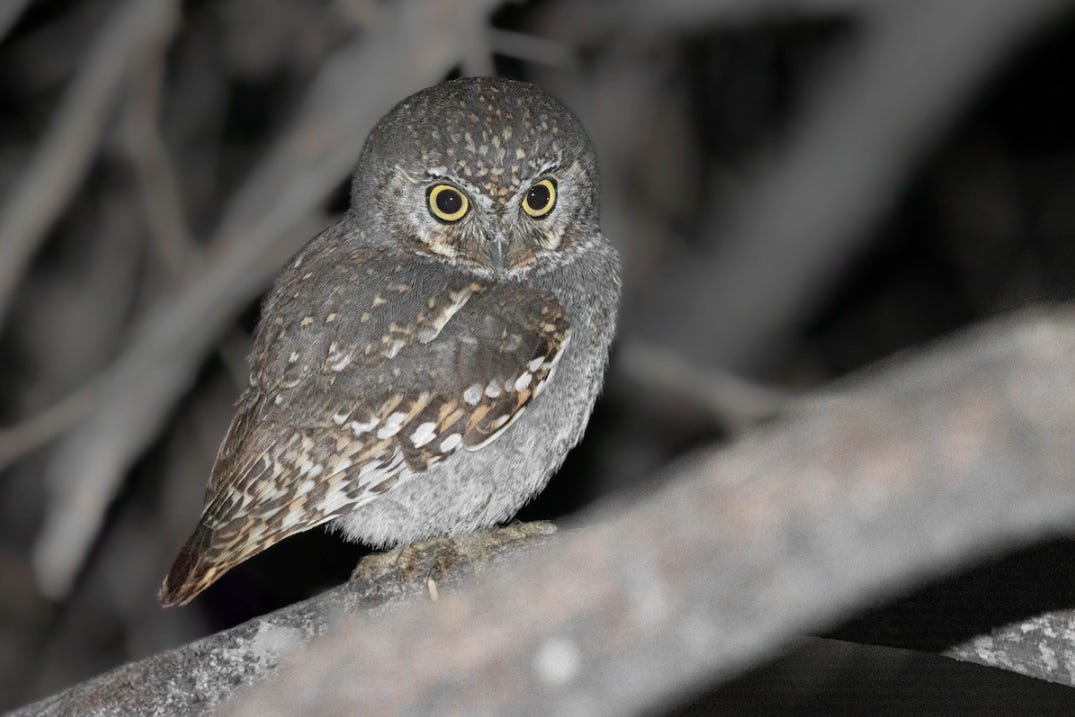
May 13, 1995 — Thirty-one years ago this week, birders Jim Stasz and Edward Boyd embarked on a memorable night of owling during the annual North American Migration Count. Beginning at 3:00 a.m. in southeast Arizona’s Cave Creek Canyon, the pair amassed an impressive nocturnal list with seven owl species, perhaps the highest total ever documented on a single eBird checklist in the United States.
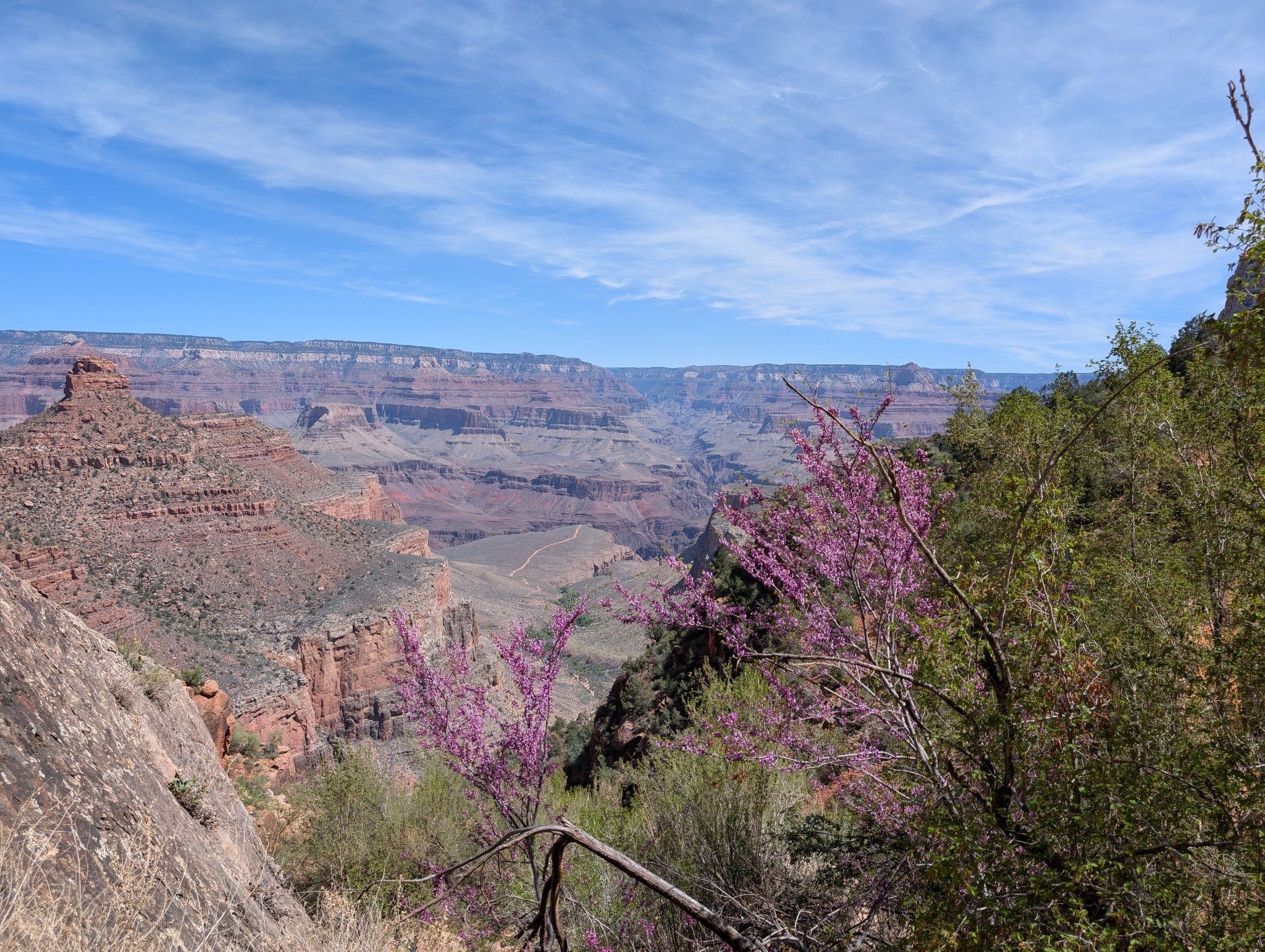
Cave Creek Canyon is widely regarded as a premier birding destination in southeast Arizona and beyond. Situated within the biodiverse Sky Islands region, the canyon blends montane forest, riparian woodland, and desert influences into an exceptional mosaic of habitats. More than 280 bird species have been recorded there, and over 10,000 eBirders have explored its trails and roads in search of specialties.
For night birders especially, Cave Creek Canyon can produce some legendary experiences. The area offers some of the continent’s best opportunities to encounter Whiskered Screech-Owl, Elf Owl, and Flammulated Owl, alongside sought-after species such as Mexican Whip-poor-will and Blue-throated Mountain-gem. On the right spring night, the canyon’s darkness can seem almost alive with voices.
Birding Tip: Using eBird’s Hotspot Groups
One of the most important parts of birding is understanding space as it relates to birds. Experienced birders know that a single “location” is often far more complicated than a point on a map. A wildlife refuge may contain forests, marshes, grasslands, boardwalks, impoundments, and shoreline all within the same property. A productive migration stop might involve several parking lots, trails, and observation points that birders routinely visit during a single outing.
The new Hotspot Groups feature in eBird is designed to better reflect how birders actually use these spaces in the field. Rather than treating every hotspot as an isolated location, Hotspot Groups connect related hotspots under a larger umbrella area. In practice, this creates a cleaner and more intuitive way to explore birding sites while improving how observations are organized and interpreted.
At first glance this may seem like a small interface change, but it has the potential to significantly improve both the birding experience and the scientific value of the data birders submit every day.
Why Hotspot Groups Matter for Birders
For many birders, finding productive locations is one of the fastest ways to improve. New birders especially can struggle to understand where to begin at large birding destinations. A hotspot name alone may not indicate whether the location refers to a marsh overlook, woodland trail, or river access point several miles from the main entrance.
Hotspot Groups help solve this problem by organizing related locations into a more understandable system. Instead of sorting through a long list of disconnected hotspots, birders can now view an entire birding complex as a unified area containing multiple sublocations.
This becomes especially valuable at major migration sites, wildlife refuges, reservoirs, and large parks. A birder visiting a new area can quickly understand how a site is laid out and which sections may best match their goals. Looking for shorebirds? Focus on impoundments or mudflats within the group. Searching for migrant warblers? Prioritize nearby wooded trails. The structure itself helps guide birding decisions.
The feature also improves trip planning by making it easier to identify clusters of nearby hotspots that may previously have been buried deep in search results.

Why This Improves the Data
One of eBird’s greatest strengths is that its data are tied to precise locations and effort information. The more accurately observations are associated with habitat and geography, the more valuable the data become for science and conservation. Hotspot Groups improve this relationship in a subtle but important way.
Historically, large birding areas sometimes produced confusing data patterns. Birders might submit lists to a broad park hotspot while others used more precise trail or habitat-specific hotspots within the same area. Over time this could fragment observations across many overlapping locations, making it harder to interpret how birds were using the landscape.
By grouping related hotspots together, eBird creates a clearer organizational framework while still preserving the precision of individual checklists. Birders are encouraged to submit data to the most accurate sublocation possible, while researchers and birders alike gain a better understanding of how those locations fit into the larger ecosystem.
This is particularly valuable for habitat monitoring. Different habitats within the same hotspot group may host very different bird species depending on weather, water levels, vegetation, or wind conditions. Organizing these locations together allows birders to compare patterns more effectively while still maintaining fine-scale data quality.
In many ways, Hotspot Groups encourage a more landscape-oriented view of birding and bird conservation. Birds do not recognize the boundaries between parking lots, trails, and observation platforms, and this feature helps birders think more naturally about how birds move through connected habitats.
Practical Ways to Use Hotspot Groups
The greatest strength of Hotspot Groups is that they reward strategic thinking about habitat and bird movement. When visiting a new destination, begin by exploring the broader hotspot group before selecting individual locations. Pay attention to how hotspots relate geographically. Often, you can identify habitat transitions, water features, elevation changes, or sheltered areas that may concentrate birds under certain conditions.
During migration, Hotspot Groups can help you adapt quickly in the field. If one section of a large park appears quiet, nearby hotspots within the same group may still be productive because of subtle habitat differences or changing wind exposure. This flexibility helps birders avoid spending too much time in unproductive areas.
The feature is also useful for recognizing seasonal patterns. Over time, you may notice that certain sections consistently produce particular species during specific seasons—one trail for spring warblers, another for winter sparrows, and another for fall shorebirds. The grouped structure makes these relationships easier to recognize.
For traveling birders especially, Hotspot Groups may also improve efficiency in unfamiliar regions. Rather than relying only on species lists or recent sightings, birders can now better understand the structure of a site itself. That often leads to stronger field decisions and a deeper understanding of local bird ecology.
A Small Change That Reflects How Birders Actually Bird
Some of eBird’s most impactful updates are not flashy. Instead, they quietly improve the way birders interact with information and contribute data. Hotspot Groups fall firmly into that category.
The feature makes birding locations easier to navigate, encourages more precise checklisting, and helps organize observations in a way that better reflects real landscapes and habitats. For birders, that means more efficient exploration and a better understanding of productive areas. For science and conservation, it means cleaner and more interpretable data tied to meaningful ecological relationships.
As some aspects of birding become increasingly data-driven, features like Hotspot Groups help bridge the gap between field experience and conservation science. The better birders understand the structure of a landscape, the better they become at both finding birds and documenting them in a meaningful way.
Thanks for Reading
Whether you’re exploring a famous canyon after dark or learning the layout of an unfamiliar birding site, birding is often about understanding place as much as species. The more thoughtfully we approach landscapes, habitats, and the tools that help organize them, the better equipped we become to find birds, contribute meaningful data, and appreciate the ecosystems that make memorable encounters possible.
Support Birding University
If you enjoy our work, you can show your appreciation with a one-time tip by buying us a “bird-friendly coffee.” Every contribution helps us keep creating content you love!